

Meditation Rooted in the Christian Tradition
An Introduction to Contemplation

As tender flowers open themselves willingly and quietly turn toward the sun, so let me, still and joyful, receive your rays and allow you to work within me.
A Comparison:
In what follows, two of the most widely practiced forms of contemplative prayer today are introduced: the Jesus Prayer, also known as the Prayer of the Heart, and Centering Prayer. The Jesus Prayer has been handed down within the tradition of the Eastern Church, while Centering Prayer emerged from French mysticism and was further developed for the contemporary context by Thomas Keating. Both forms of prayer can be traced back to early Christian experiences of the so-called Desert Fathers and Mothers and have gained renewed attention worldwide over recent decades.
What these two prayer practices share is an invitation to train oneself in a lovingly attentive, non-controlling openness to the presence of God.
The Jesus Prayer is a simple breath prayer. A name of God or a short prayer phrase is inwardly linked with the breath. The classical formulation is: “Lord Jesus Christ, have mercy on me.” In practice, this is often shortened to “Jesus” or “Jesus Christ”; other sacred words or names of God are also possible. In the prayer path taught at Haus Gries, a bodily perceptible sensation — for example in the palms of the hands or in the heart area — additionally serves as an anchor. When distractions arise, attention is gently returned to this place.
In Centering Prayer , a freely chosen sacred word takes on this anchoring function. It is spoken inwardly and expresses the personal intention to open oneself to God’s presence and God’s hidden action. During the time of meditation, arising thoughts, feelings, and bodily sensations are not pursued but gently released, returning through the sacred word to silent presence.
Mindfulness
Mindfulness is a form of attention that rests in the present moment without judgment. It is open and kind toward what is present here and now — inwardly and outwardly.
Contemplative Attitude
A contemplative attitude is mindfulness plus an openness, received in faith, to God’s loving presence. This “plus” is not an added effort, but an inner intuition or expectancy that God is present in all things.
Contemplation
Contemplation is a deep resting in loving “beholding” and “being beheld” by God. It is more being than seeing and is often described as pure presence or a sense of connectedness that reaches deeper than thoughts and feelings. Contemplation is a wordless, imageless, objectless being-with God.
Contemplative Practice
Contemplation is not a state that can be produced or held by one’s own effort. Yet one can open oneself to it through contemplative practices. A contemplative practice is an exercise or form of prayer in which one turns, with mindful awareness, toward reality and toward God’s immanence in all things.
A Contemplative Way of Life
A contemplative way of life usually grows out of a regular contemplative practice. A contemplative person more easily finds a present, awake attentiveness — in nature, in relationships, in contact with one’s own inner state, thoughts, and feelings. Some people are naturally inclined in this direction. Most people shaped by Western culture, however, are influenced by performance pressure, sensory overload, and media consumption, and are invited to gently reorient and transform their perception through meditation.
And What Does Neuroscience Have to Do with This?
Neuroscientific research now demonstrates a wide range of positive effects of contemplative forms of meditation — such as mindfulness meditation — on perception, emotional regulation, and overall well-being.
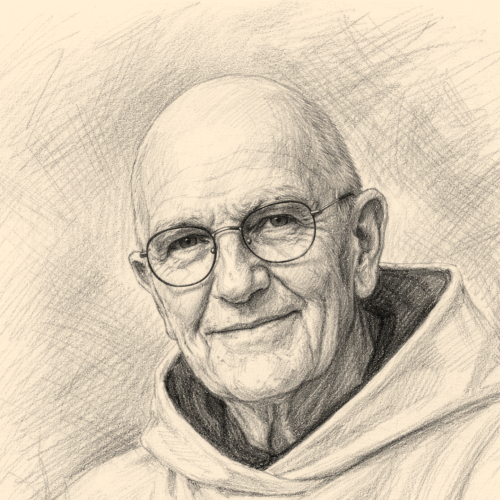
This presence is so immense, and yet so humble; so awe-inspiring, and yet so gentle; limitless, and yet so intimate, tender, and personal. I realize that I am known. Everything in my life is transparent in this presence. It knows everything about me — all my weaknesses, my brokenness, my sinfulness — and yet loves me infinitely. This presence heals, strengthens, refreshes — simply by being present. It does not judge, gives itself freely, seeks no reward, is inexhaustibly compassionate. It is like coming home to a place I should never have left; coming home to an attentiveness that was somehow always there, but which I did not recognize…
Herzliche Einladung zu meinem Meditationskurs "Präsenz"
A four- to six-week course in a group setting. Daily times of prayer at home (15–30 minutes) are introduced and supported through weekly group meetings.
Schon zum elften Mal im Rhein-Neckar-Kreis und online.
Nächster Online-Kurs startet am 16.02.2027
Bei Interesse an einem weiteren online course please contact: .
Once nine participants have registered, a date will be arranged.

By “contemplative” I am not referring to a deep mystical experience, but rather the kind of relationship with God in which you are able to notice what God is like and what God is doing, be affected by it, notice how one is affected, and respond to God out of that awareness.